Managing leases has never been simple. But since IFRS 16 came into effect, the job of every finance team got significantly more complicated. What used to be a few lines on an expense report now demands detailed calculations, right-of-use assets, lease liabilities, and regular journal entries. The good news is that finance professionals are finding smarter ways to handle all of this, and they are saving hours every month in the process.
This article breaks down how finance teams are cutting through the complexity of IFRS 16 lease accounting, what tools and strategies are making a real difference, and how your team can do the same.
Understanding Why IFRS 16 Calculations Take So Much Time
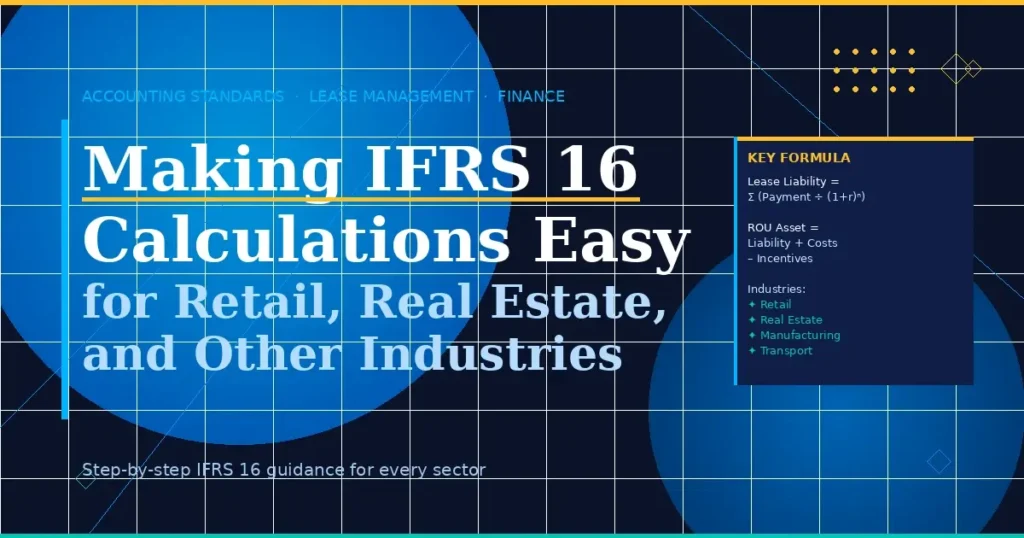
Before we talk about solutions, it helps to understand the problem. IFRS 16 replaced the old lease standard IAS 17 and required companies to bring most operating leases onto the balance sheet. That means for every lease, finance teams now need to:
- Calculate the present value of future lease payments
- Record a right-of-use asset and a corresponding lease liability
- Split each monthly payment into interest expense and principal repayment
- Reassess and remeasure leases when terms change
- Prepare proper disclosures in financial statements
Each of these tasks requires precise data, the right discount rate, and consistent methodology. When a company holds dozens or even hundreds of leases, this becomes a massive workload, especially at month-end and year-end.
The Biggest Time Drains for Finance Teams
Finance teams commonly report that the following areas eat up the most time when dealing with IFRS 16:
Manual Spreadsheet Management
Many companies still rely on spreadsheets to track lease data and run their IFRS 16 calculations. Spreadsheets can work for small portfolios, but they become fragile fast. A formula error or a missed update can cascade into serious reporting mistakes. Teams spend enormous amounts of time checking, cross-referencing, and correcting spreadsheet models.
Handling Lease Modifications
When a lease changes, for example if a company extends a lease term or renegotiates rent, the whole schedule needs to be recalculated from the modification date. Doing this manually for multiple leases is slow and error-prone.
Tracking Variable Lease Data
Some leases include variable payments tied to indexes or interest rates. When those rates change, finance teams need to update their models and recalculate liabilities. This is especially challenging when done without automated tools.
Meeting Audit and Disclosure Requirements
Auditors require clear documentation and reconciliation of opening and closing lease liability balances, interest charges, and additions or disposals. Preparing this manually takes hours that finance teams simply do not always have.
How Finance Teams Are Solving These Challenges
The finance teams that are saving the most time are doing a few key things differently. Here is what is working.
1. Adopting Dedicated Lease Accounting Software
The single biggest time-saver reported by finance professionals is switching from spreadsheets to purpose-built lease accounting software. These platforms are designed specifically for IFRS 16 compliance and automate the heavy lifting.
A good lease accounting tool will automatically:
- Generate amortization schedules for every lease
- Recalculate liabilities when lease terms change
- Apply the correct discount rate to each lease
- Produce journal entries ready for posting
- Generate disclosure notes and reports for auditors
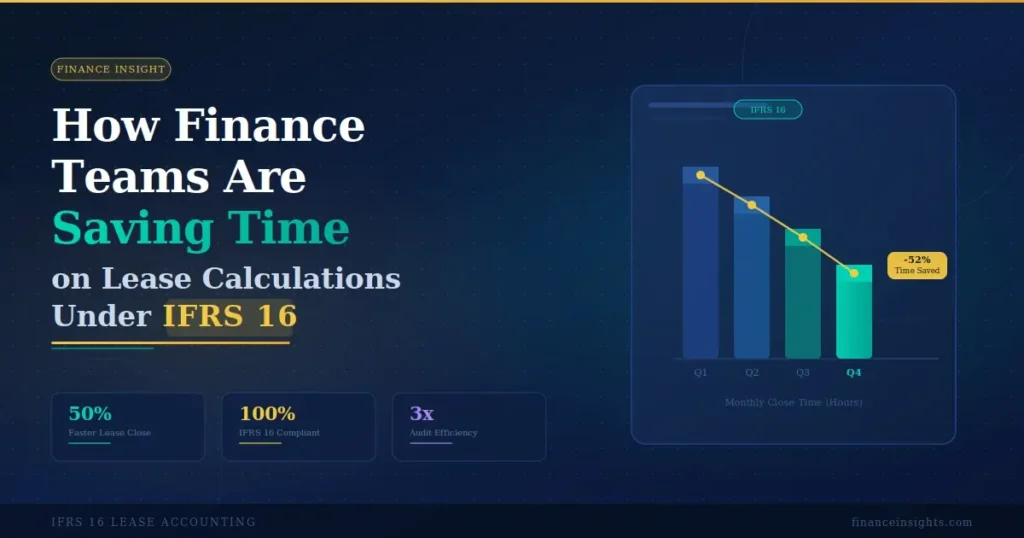
Teams that make this switch often report cutting their monthly close time related to leases by 50 percent or more. What once took two days can often be done in a few hours.
2. Centralizing Lease Data in One Place
Scattered lease data is a productivity killer. Finance teams that consolidate all lease information into a single source of truth spend far less time hunting for documents, chasing down contract terms, or reconciling conflicting records.
This means building or using a lease register that stores key data such as commencement dates, lease terms, payment schedules, renewal options, and applicable discount rates. With centralized data, everyone on the finance team works from the same information, reducing duplication and mistakes.
3. Automating Discount Rate Updates
Choosing the right incremental borrowing rate is one of the trickiest parts of IFRS 16. It varies by lease term, currency, and the company’s credit profile. Finance teams are saving time by documenting a clear methodology and, where possible, automating the process of applying updated rates when leases are modified or new ones are added.
Some companies work with their treasury teams or external advisors to set up rate tables that can be plugged directly into their lease accounting systems, avoiding the need to recalculate from scratch each time.
4. Building Standardized Workflows and Templates
Teams that have documented step-by-step workflows for common lease tasks, such as adding a new lease, processing a modification, or preparing year-end disclosures, make the process faster and more consistent.
Standard templates for journal entries and disclosure notes also reduce the time spent formatting and checking outputs every reporting period. When a new team member joins, a clear process means they get up to speed quickly without making costly errors.
5. Scheduling Regular Lease Portfolio Reviews
Rather than discovering lease changes at month-end, proactive finance teams schedule regular check-ins with operations, facilities, and procurement to stay ahead of upcoming lease modifications, new agreements, or terminations.
This means fewer surprises, fewer emergency recalculations, and a smoother close process. It also makes audit preparation much easier because nothing has been missed or left to the last minute.
The Role of Technology in IFRS 16 Compliance
Technology is clearly at the heart of how finance teams are becoming more efficient with IFRS 16. Beyond dedicated lease accounting platforms, many teams are also integrating their lease data with broader ERP and financial reporting systems.
This integration means lease journal entries post automatically to the general ledger, balance sheet and income statement figures update in real time, and finance managers have a live view of the company’s total lease liability at any given moment.
Cloud-based lease accounting tools offer additional advantages. Teams can access data from anywhere, multiple team members can work simultaneously, and software updates ensure the system stays compliant with the latest accounting standards without manual intervention.
What Finance Leaders Are Saying
Finance directors and controllers who have modernized their lease accounting consistently point to three major benefits: time savings, reduced risk of errors, and better visibility into lease obligations.
When month-end close used to be stressful and slow because of lease calculations, having the right system turns it into a routine task. Teams feel more confident in their numbers, and auditors appreciate the clean, well-documented audit trail.
The investment in better tools and processes pays off quickly, especially for companies with large lease portfolios or complex agreements.
Getting Started: Practical Steps for Your Finance Team
If your team is still struggling with IFRS 16 calculations, here are some practical first steps:
- Audit your current process: Map out every step your team currently takes to handle lease accounting and identify where the most time is being lost.
- Evaluate your lease portfolio size: If you have more than 10 to 15 leases, a dedicated software solution is almost certainly worth the investment.
- Research lease accounting tools: Look for solutions that offer IFRS 16 amortization schedules, journal entry automation, and disclosure report generation.
- Standardize your discount rate methodology: Work with your treasury team or advisors to document a consistent approach.
- Train your team: Make sure everyone involved in lease accounting understands both the standard requirements and the tools being used.
Final Thoughts
IFRS 16 is here to stay, and the demands it places on finance teams are real. But with the right tools, processes, and mindset, those demands do not have to translate into long nights and stressful closes.
Finance teams that have embraced automation, centralized their data, and built repeatable workflows are not just saving time. They are producing more accurate reports, passing audits with confidence, and freeing up bandwidth to focus on higher-value financial analysis.
The question is not whether to modernize your approach to IFRS 16 lease calculations. The question is how quickly you can get started.