
Maria Allen

I’m a finance professional specializing in IFRS 16 and lease accounting. I have 4+ years of experience and I focus on accurate reporting, compliance, and simplifying complex lease data. I enjoy improving financial processes and delivering clear insights that support better business decisions and transparency.

ERP and IFRS 16: Why Lease Accounting Breaks When The Systems Don't Talk to Each Other

ERP and IFRS 16: Why Lease Accounting Breaks When The Systems Don’t Talk to Each Other

Most finance teams assume their ERP system handles everything related to financial reporting, including leases. In reality, ERP systems were largely built before IFRS 16 existed, and many were never designed to manage the kind of ongoing lease calculations the standard requires. When a business relies on its ERP alone, or bolts on a separate […]

ERP and IFRS 16: Why Lease Accounting Breaks When The Systems Don’t Talk to Each Other Read More »
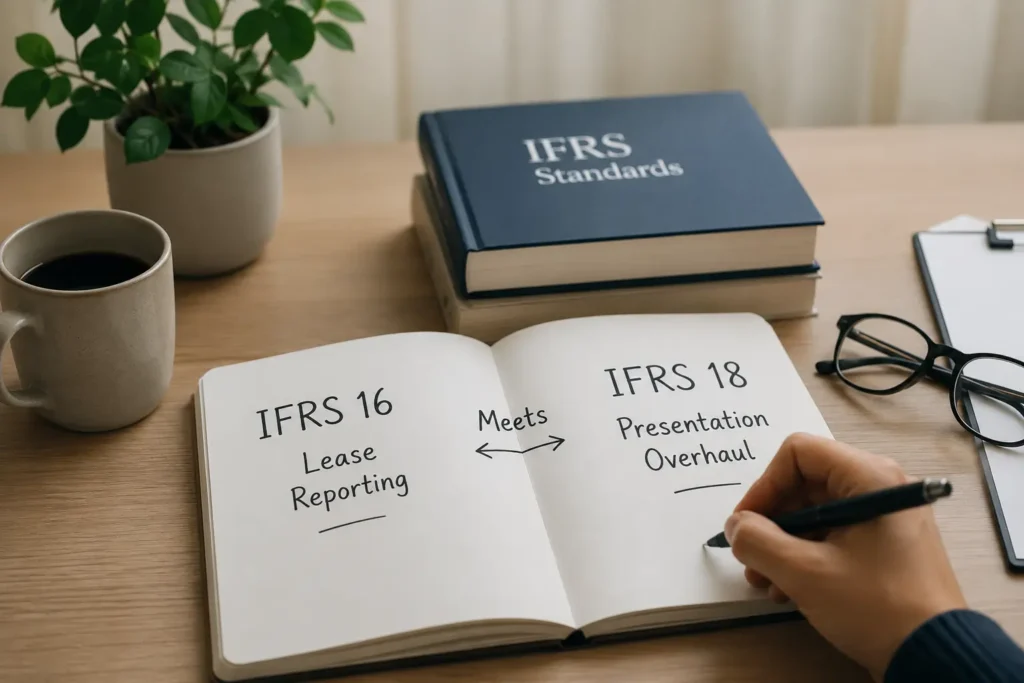

IFRS 16 Meets IFRS 18: What the 2027 Presentation Overhaul Means for Lease Reporting

IFRS 16 Meets IFRS 18: What the 2027 Presentation Overhaul Means for Lease Reporting

IFRS 16 changed how leases are measured and recognized. Now a new standard, IFRS 18, is changing how financial performance gets presented overall, and that has real implications for how lease related figures show up in your financial statements. If your business reports under IFRS, this is a change worth understanding well before it becomes

IFRS 16 Meets IFRS 18: What the 2027 Presentation Overhaul Means for Lease Reporting Read More »

How Lenders and Credit Analysts Read IFRS 16 Financial Statements Differently

How Lenders and Credit Analysts Read IFRS 16 Financial Statements Differently

When IFRS 16 came into effect, most of the conversation focused on how accountants would calculate lease liabilities and right of use assets. Less attention went to how the people reading those financial statements afterward, particularly lenders and credit analysts, would actually interpret the new numbers. That gap matters, because the way credit professionals read

How Lenders and Credit Analysts Read IFRS 16 Financial Statements Differently Read More »

This sale-and-leaseback-under-ifrs-16-amendment

Sale-and-Leaseback Under the Amended IFRS 16: What Changed and Why It Matters

Sale-and-leaseback deals have long been a popular way for businesses to free up cash tied up in property or equipment while still keeping the use of that asset. But for years, one part of the accounting for these transactions had a gap that created real inconsistency across companies. Standard setters addressed this gap with a

Sale-and-Leaseback Under the Amended IFRS 16: What Changed and Why It Matters Read More »

Lease vs. Non-Lease Components Under IFRS 16

Lease vs. Non-Lease Components: Unbundling Contracts Correctly Under IFRS 16

Not every contract that includes a lease is purely a lease. Many agreements bundle the right to use an asset together with other services, such as maintenance, insurance, or utilities. Under IFRS 16, businesses are required to separate, or “unbundle,” these components, and getting this wrong can significantly distort your lease liability and right of

Lease vs. Non-Lease Components: Unbundling Contracts Correctly Under IFRS 16 Read More »

This blog image is about Sublease Accounting Under IFRS 16

Sublease Accounting Under IFRS 16: Head Lease and Sublease Treatment Explained

Subleasing is common in many businesses, whether it involves renting out unused office space, passing on equipment no longer needed, or restructuring operations after downsizing. But when a business becomes both a lessee and a lessor within the same arrangement, IFRS 16 introduces a layer of complexity that is easy to get wrong if you

Sublease Accounting Under IFRS 16: Head Lease and Sublease Treatment Explained Read More »

This image is for Variable Lease Payments Under IFRS 16

Variable Lease Payments Under IFRS 16: What Counts and What Doesn’t

Lease agreements are rarely as simple as a fixed monthly payment. Many contracts include variable elements, whether tied to an index, a market rate, sales performance, or actual usage of the leased asset. Under IFRS 16, how these variable payments are treated depends entirely on what they are linked to, and getting this classification wrong

Variable Lease Payments Under IFRS 16: What Counts and What Doesn’t Read More »

The Lease Term Reassessment Under IFRS 16

Lease Term Reassessment: Handling Renewal and Termination Options Under IFRS 16

One of the trickier parts of IFRS 16 is that the lease term is not always a fixed, simple number. Many leases include renewal options, termination options, or both, and businesses need to make a judgment call about whether these options will actually be exercised. That judgment does not stay static either. It can change

Lease Term Reassessment: Handling Renewal and Termination Options Under IFRS 16 Read More »

Blog Image for IFRS 16 Disclosure Requirements.

IFRS 16 Disclosure Requirements: What Your Notes to the Financial Statements Must Include

Getting the numbers right on your balance sheet is only part of IFRS 16 compliance. The standard also sets out detailed disclosure requirements, and this is an area many businesses underestimate until an auditor or investor starts asking pointed questions. Disclosures matter because they give the reader of your financial statements the context behind the

IFRS 16 Disclosure Requirements: What Your Notes to the Financial Statements Must Include Read More »