Buying a car, piece of equipment, or business asset almost always comes down to one question: should you finance it or lease it? Both options let you get behind the wheel or onto the shop floor without paying full price upfront, but they work in fundamentally different ways — and picking the wrong one can cost you thousands of dollars or lock you into terms that don’t fit your business.
This guide breaks down exactly how financing and leasing differ, when each makes sense, and how to decide which one actually serves your goals.
What Is the Difference Between Finance and Leasing?
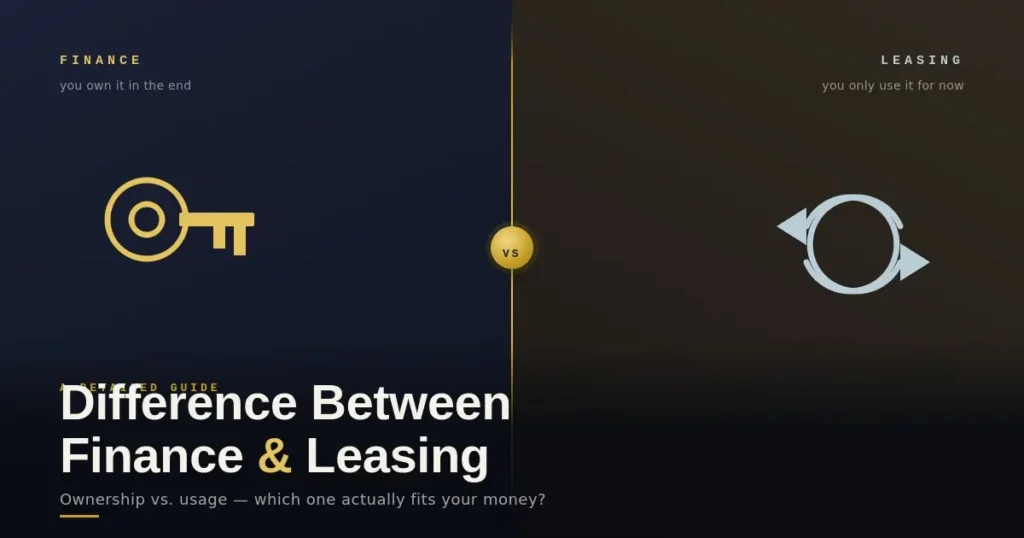
The core difference between finance and leasing comes down to ownership.
- Financing means you’re borrowing money to buy an asset. You make monthly payments, and once the loan is paid off, you own the asset outright. Every payment builds equity.
- Leasing means you’re paying to use an asset for a fixed period without owning it. At the end of the lease, you typically return the asset, renew the agreement, or pay a buyout price to purchase it.
Think of financing like a mortgage — you’re working toward ownership. Leasing is more like renting an apartment — you get full use of the asset, but it belongs to someone else, and you hand it back when the term ends.
Here’s a side-by-side breakdown of how the two options compare:
| Factor | Financing | Leasing |
|---|---|---|
| Ownership | You own the asset after final payment | The leasing company owns the asset |
| Monthly Payments | Usually higher | Usually lower |
| Down Payment | Often required, can be substantial | Often lower or none |
| Equity | Builds equity over time | No equity built |
| Mileage/Usage Limits | None | Often capped (for vehicles) |
| End of Term | You keep the asset free and clear | Return, renew, or buy it out |
| Customization | Full freedom to modify | Usually restricted |
| Best For | Long-term use, building equity | Short-term use, frequent upgrades |
| Tax Treatment | Depreciation and interest may be deductible | Lease payments may be fully deductible as a business expense |
| Total Cost Over Time | Lower long-term cost if kept past loan term | Can cost more over many years if leasing repeatedly |
Financing Options at a Glance
When you choose financing, you’re typically working with a bank, credit union, dealership, or online lender. The lender pays for the asset upfront, and you repay them — plus interest — over an agreed period, usually 2 to 7 years depending on the asset type. Once you make the final payment, the title transfers fully to you.
Financing options vary based on your credit profile, the asset type, and the lender. Common structures include:
- Fixed-rate loans — consistent monthly payments for the life of the loan
- Variable-rate loans — payments that fluctuate with market interest rates
- Balloon financing — lower monthly payments with a large lump sum due at the end
- Secured loans — the asset itself acts as collateral, often resulting in lower interest rates
How Lease Financing Works
Lease financing is a slightly different animal. It’s technically leasing, but structured through a financial institution rather than directly through a manufacturer or dealer. This is common in equipment financing and vehicle financing for businesses that want the tax advantages of leasing without going through the original asset seller.
In a typical lease agreement, you agree to:
- A fixed monthly payment for a set term (usually 24–48 months for vehicles, longer for equipment)
- A mileage or usage cap (common in vehicle leases)
- Wear-and-tear standards you must meet when returning the asset
- An optional buyout price if you want to purchase the asset at lease-end
Finance vs Leasing: Which Costs Less?
This is the question most people actually want answered, and the honest answer is: it depends on how long you plan to keep and use the asset.
- If you plan to keep an asset for its full useful life (say, driving a car for 10+ years, or using equipment until it’s obsolete), financing is almost always cheaper in the long run. Once the loan is paid off, you have zero monthly payments and a fully-owned asset.
- If you like to upgrade frequently — a new car every 2-3 years, or the latest equipment model every lease cycle — leasing can work out cheaper per period, since you’re only paying for the depreciation that occurs during your usage window, not the entire value of the asset.
Quick math example: A $40,000 vehicle financed over 5 years at 6% interest costs roughly $773/month, and after 60 months, you own a paid-off vehicle. The same vehicle leased over 3 years might cost roughly $500/month, but at the end you own nothing — and if you keep leasing new vehicles every 3 years indefinitely, you’ll pay far more over 15 years than someone who financed and kept driving their paid-off car.
Leasing vs Financing: Key Factors to Weigh Before Deciding
1. How Long Will You Use the Asset?
Short-term need (2-4 years) → leasing typically wins. Long-term need (5+ years) → financing typically wins.
2. Do You Want to Build Equity?
Financing builds an asset you can sell, trade in, or use as collateral later. Leasing builds nothing — you’re paying for usage rights only.
3. How Important Is Cash Flow?
Leasing generally requires a smaller down payment and lower monthly payments, which frees up cash for other business needs. This is a major reason small businesses lean toward leasing for equipment financing and vehicle fleets.
4. What Are the Tax Implications?
This varies by country and asset type, so it’s worth confirming with an accountant, but generally:
- Lease payments are often fully deductible as a business operating expense.
- Financed assets allow you to deduct depreciation and loan interest, which can offer larger deductions over time but are spread out differently.
5. Do You Need Flexibility or Predictability?
Business financing through leasing gives you the flexibility to upgrade to newer models or equipment every few years without dealing with resale. Asset financing through a loan gives you predictability and eventual full ownership, with no restrictions on mileage, modifications, or usage.
6. What Are the Restrictions?
Leases often come with mileage limits (for vehicles), wear-and-tear clauses, and restrictions on modifications. Financed assets are yours to modify, use, or sell as you see fit from day one, even though the lender holds a lien until the loan is paid off.
Finance or Leasing: A Simple Decision Framework
Ask yourself these four questions:
- Will I use this asset for more than 5 years? → Lean toward financing.
- Do I want to avoid a large down payment and keep monthly costs low? → Lean toward leasing.
- Do I want to build equity or resale value? → Lean toward financing.
- Do I need the latest models/technology on a regular cycle? → Lean toward leasing.
If your answers point in different directions, prioritize your cash flow needs first — a lease that keeps your business liquid is often more valuable than equity in an asset you can’t afford to maintain.
Common Mistakes to Avoid
- Leasing an asset you plan to keep long-term. You’ll pay indefinitely with nothing to show for it once the lease ends.
- Financing an asset that depreciates fast without checking resale value. You could end up owing more than the asset is worth.
- Ignoring mileage or usage caps in a lease agreement. Overage fees can erase any savings you thought you were getting.
- Not comparing the total cost of ownership, not just the monthly payment, before signing either type of agreement.
- Skipping the fine print on end-of-lease conditions. Wear-and-tear charges can be steep if not clearly understood upfront.
FAQs
Q1: What is the main difference between finance and leasing?
Financing means you borrow money to buy something, and you own it once the loan is paid off. Leasing means you pay to use something for a set time, but you never own it unless you buy it at the end.
Q2: Is leasing cheaper than financing?
Leasing usually has lower monthly payments, so it feels cheaper at first. But if you keep leasing over and over for many years, financing often ends up cheaper because you eventually own the asset and stop paying altogether.
Q3: Should I lease or finance a car or equipment for my business?
If you plan to use it for a short time and want lower payments, lease it. If you plan to use it for many years and want to own it in the end, finance it. Your choice depends on how long you need it and how much cash flow you want to keep free.
Final Takeaway
The difference between finance and leasing ultimately comes down to whether you want to own or simply use an asset. Financing costs more per month but builds equity and ends in full ownership. Leasing costs less per month and offers flexibility but leaves you with nothing once the term ends — unless you choose to buy it out.
There’s no universal right answer. The best choice depends on how long you need the asset, how important cash flow is to your business, and whether ownership matters to your long-term goals. Run the numbers on both financing options and lease agreements available to you, factor in your usage plans, and choose the structure that aligns with how you actually intend to use — or keep, the asset.