Imagine spending weeks preparing your company’s financial balance sheets, only to find out your numbers are completely wrong. For many finance teams, this nightmare is a daily reality.
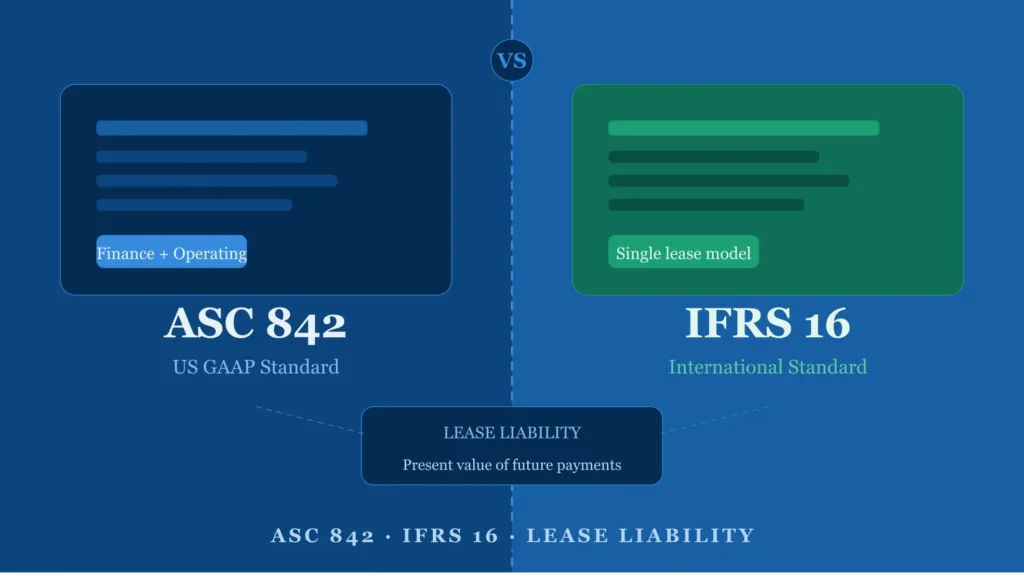
When the new standards like ASC 842 and IFRS 16 took effect, they changed the rules of the game. Companies could no longer hide operating leases in the footnotes of their financial statements. Today, almost every lease must sit directly on your balance sheet.
Because of these strict rules, making lease accounting mistakes has become incredibly easy. A single overlooked contract or a minor math error can throw off your entire financial report. This leaves your business exposed to compliance audits, heavy penalties, and damaged trust with investors.
In this guide, you will learn the top 10 lease accounting errors that companies make and get actionable, step-by-step strategies to avoid them completely. Let’s dive in and get your books perfectly balanced.
Why Modern Lease Accounting is So Challenging
Before we look at the specific errors, we need to understand why this process causes so many headaches. Under the old rules, tracking a lease was simple. If you rented an office, you just recorded the monthly rent payment as a regular business expense.
The modern standards flipped this approach upside down. Now, you must calculate the present value of your future lease payments. This means you have to create a Right-of-Use asset and a matching lease liability on your balance sheet.
Suddenly, a simple rental agreement turns into a complex math puzzle. If your company manages dozens or hundreds of contracts—like laptops, delivery trucks, and office buildings—the paperwork can quickly become overwhelming.
10 Common Lease Accounting Mistakes You Need to Avoid
Let’s break down the most frequent traps that finance teams fall into and look at exactly how you can protect your business from them.
1. Missing Embedded Leases in Standard Vendor Contracts
One of the biggest lease accounting mistakes is assuming a lease only exists if a contract has the word “lease” written at the top. Many businesses sign service agreements that actually contain hidden, or embedded, leases.
An embedded lease exists whenever a contract grants your business the exclusive right to control a specific, physically distinct asset. If a vendor provides a service using an asset that you control, you might actually be leasing that asset under the law.
- The Trap: You sign a data storage contract where the vendor gives you exclusive use of three specific, named servers in their warehouse. You account for this as a monthly service expense, completely leaving it off your balance sheet.
- The Fix: Create a strict contract review process. Work closely with your procurement team to scan every new vendor agreement for specific assets that your company controls.
2. Choosing the Wrong Discount Rate
To find the present value of your lease payments, you must use a discount rate. The standard rules require you to use the Rate Implicit in the Lease (IBR) if it is easily known. However, landlords rarely share this exact number.
If you do not know that rate, you must calculate your Incremental Borrowing Rate (IBR). This is the interest rate your business would pay if it borrowed money to buy a similar asset over a similar timeframe.
[Total Lease Value] ---> Adjusted by [Incorrect Discount Rate] ---> Faulty Balance Sheet Numbers
- The Trap: A company applies one single, flat interest rate to every single asset they lease, completely ignoring the length of the lease or the type of asset.
- The Fix: Build a clear, documented discount rate framework. Update your IBR numbers at least once every quarter to match shifting market conditions.
3. Mixing Up Lease and Non-Lease Components
Lease contracts often bundle multiple costs together. For example, a building lease might include the base rent plus extra fees for building maintenance, security guards, and janitorial services.
Under compliance rules, the base rent is a “lease component” and must go on the balance sheet. The maintenance and security costs are “non-lease components” and should generally be treated as standard operating expenses.
| Component Type | What It Includes | Balance Sheet Treatment |
| Lease Component | Core land, building space, or equipment use | Must be recorded as an ROU Asset & Liability |
| Non-Lease Component | Common Area Maintenance (CAM), security, cleaning | Expensed normally (unless an election is made) |
- The Trap: A business adds the entire bundled monthly invoice directly into their lease liability math, which artificially inflates the company’s debts.
- The Fix: Demand that landlords provide fully itemized invoices. If they refuse, use practical expedients allowed by accounting standards to group components together safely.
4. Guessing Incorrectly on Lease Terms and Renewal Options
A lease term is not always just the initial timeframe written in the contract. If your contract includes an option to extend the lease, you must include those extra years if you are reasonably certain to exercise that option.
Predicting the future behavior of your business operations is tough, but guessing blindly can lead to major accounting errors down the road.
- The Trap: You lease a retail storefront for 3 years with an option to extend for another 5 years. You have already spent $200,000 customizing the interior space, but you only calculate your lease liability based on the initial 3-year timeline.
- The Fix: Look at the economic realities. If your company spends significant money upgrading a leased building, assume you will stay there long-term and include the renewal options in your calculations.
5. Forgetting to Track Lease Modifications
Business needs shift constantly. You might negotiate with a landlord to reduce your office space mid-year, extend a truck lease early, or adjust your monthly payments due to unexpected market shifts.
Every single time a contract changes, you must re-measure your lease liability and adjust your ROU asset. Forgetting to log these adjustments creates immediate inaccuracies.
- The Trap: A business changes their monthly payments on an active lease but continues using their original, outdated amortization schedule for the rest of the year.
- The Fix: Set up a mandatory monthly communication channel between your operations managers and the accounting department to catch contract changes early.
6. Mismanaging Short-Term Lease Exemptions
Both ASC 842 and IFRS 16 offer a helpful shortcut: you do not have to put leases on your balance sheet if the total term is 12 months or less. Instead, you can treat them like old-fashioned operating expenses.
However, this exemption comes with a very important catch. If a short-term contract contains a renewal option that you are likely to use, it no longer qualifies as short-term.
- The Trap: A company repeatedly signs a series of rolling, consecutive 11-month equipment rentals to keep the assets completely off their books.
- The Fix: Evaluate the true intent of the contract. If you plan to keep using an asset year after year, put it on your balance sheet from day one.
7. Mishandling Variable Lease Payments
Many leases include variable payments that shift over time. These changes might be tied to an index like the Consumer Price Index (CPI), or based on your actual usage of the asset (like paying extra fees for driving a leased truck over a certain mileage limit).
- The Trap: An accountant tries to guess future inflation rates and builds those speculative increases directly into the baseline lease calculations.
- The Fix: Only include variable payments based on an index using the specific rate active at the start of the lease. Treat any future usage-based changes as separate expenses in the period they happen.
8. Relying Heavily on Scattered Spreadsheets
When you only have one or two leases, managing them in a basic spreadsheet works perfectly fine. But as your company grows, manual data entry quickly becomes dangerous.
A single broken cell formula, a mistyped date, or a deleted row can quietly destroy the accuracy of your financial reports. Spreadsheets also lack audit trails, meaning you cannot easily prove who changed a number or why.
- The Trap: A mid-sized company manages 45 separate equipment leases across 5 different desktop spreadsheet files, leading to frequent version confusion.
- The Fix: Invest in dedicated, compliance-ready lease accounting tool once your portfolio grows past a few active contracts.
9. Completely Skipping Intercompany Lease Tracking
Many large corporations rent assets from their own subsidiary branches or sister companies. Because this money stays inside the larger corporate family, teams often assume they do not need to follow strict accounting rules for these internal transfers.
This is a major error. While these internal balances wipe out during final consolidation, the individual legal entities must still report them accurately on their own independent balance sheets.
- The Trap: A parent company uses a warehouse owned entirely by its subsidiary but fails to create any formal lease accounting entries for the arrangement.
- The Fix: Treat internal agreements with the exact same professional rigor as external contracts, ensuring clear written documentation for every asset transfer.
10. Failing to Build a Strong Internal Audit Trail
When external auditors arrive to check your books, they will not just look at your final numbers. They want to see the exact logic, dates, interest rates, and contract clauses you used to calculate those numbers.
If you cannot quickly provide a clear paper trail showing how you reached your conclusions, you run a high risk of failing your audit.
- The Trap: An accountant calculates their numbers on a notepad or personal scratch sheet, then deletes the files after typing the final totals into the main ledger.
- The Fix: Keep a centralized digital archive for every lease. Save copies of the original contract, documented IBR justifications, and your exact amortization math.
Expert Tips for Flawless Compliance
Pro Tip: Do not isolate your accounting team. The most successful businesses build a cross-functional compliance team that unites IT, legal, procurement, and finance to catch contract issues before they turn into costly accounting mistakes.
- Build an Asset Inventory Check: Run a physical equipment audit once a year. Cross-reference the actual machinery on your warehouse floor against the active contracts listed in your accounting ledger.
- Standardize Your Abstracting: Create a simple, uniform checklist for reading new contracts. This ensures every accountant extracts data like start dates, termination clauses, and index options the exact same way.
- Train Procurement Teams: Teach your purchasing department how embedded leases work. If they understand the financial impact of contract terms, they can negotiate better arrangements with vendors.
Frequently Asked Questions
Q1. What exactly is an embedded lease, and how do I spot one?
An embedded lease is a rental agreement tucked inside a standard service contract. You can easily spot one by looking for two specific conditions: First, the contract must rely on a clearly identified, specific asset. Second, your company must have the exclusive right to control the use of that asset throughout the duration of the agreement.
Q2. Can we still use spreadsheets to manage our company’s leases?
If your business only manages a tiny handful of basic, unchanging contracts, standard spreadsheets can get the job done. However, if your portfolio includes more than ten active leases—or if your agreements feature frequent modifications and variable payments, spreadsheets quickly become risky. They lack the automated calculations and transparent audit trails needed for reliable compliance.
Q3. How do short-term leases impact our corporate balance sheet?
If a lease has a maximum possible term of 12 months or less at its start date, you can choose to keep it completely off your balance sheet. Instead, you can simply recognize the monthly rent payments as a regular operating expense. Just remember: if the contract includes a renewal option that you are likely to use, it fails the short-term test and must be recognized on your books.
Q4. How often should our finance team update our Incremental Borrowing Rate (IBR)?
Your finance team should review and refresh your company’s IBR framework at least once every quarter. Because interest rates and market conditions shift constantly, using outdated borrowing rates will result in incorrect present-value math on your balance sheet, distorting both your assets and liabilities.
Q5. What happens if our company fails an official lease accounting audit?
Failing a financial audit can trigger severe consequences for your business. It often leads to costly restatements of your public financial reports, sharp drops in investor confidence, and potential penalties from regulatory boards. It can also hurt your credit worthiness, making it significantly more difficult or expensive to secure business loans in the future.
Conclusion
Mastering compliance and avoiding common lease accounting mistakes requires continuous focus, robust processes, and clear communication across your entire company. Trying to manage complex balance sheets through manual data entry and scattered spreadsheets is a recipe for compliance failure.
Take a proactive step to protect your business today. Review your current contract workflow, check your embedded lease exposure, and ensure your discount rates are fully updated. If you are managing a growing portfolio, look into dedicated leasing software to automate your math and secure your audit trails.