- July 10, 2026
- Maria Allen
- 9:56 pm
There was a time when spreadsheets felt like more than enough to handle lease accounting. A few tabs, some formulas, and a shared file were all it took to keep track of lease payments and balances. But as lease portfolios have grown and standards like IFRS 16 have added new layers of complexity, that same spreadsheet approach has started to show its cracks.
More finance teams are now making the shift to automated lease accounting, and it is not just a trend. It is a response to real operational pain points that spreadsheets were never built to solve.
The Spreadsheet Problem Nobody Talks About Enough
Spreadsheets are flexible, which is exactly why they became the default tool for so many finance functions. But that flexibility comes at a cost. There is no built in structure to prevent errors, no audit trail to show who changed what and when, and no automatic way to flag when a lease needs to be reassessed.
As lease portfolios grow past a handful of agreements, the risk of broken formulas, outdated data, and version control issues grows right along with it. Finance teams often find themselves spending more time maintaining the spreadsheet than actually analyzing the numbers within it.
Why IFRS 16 Made the Problem Worse
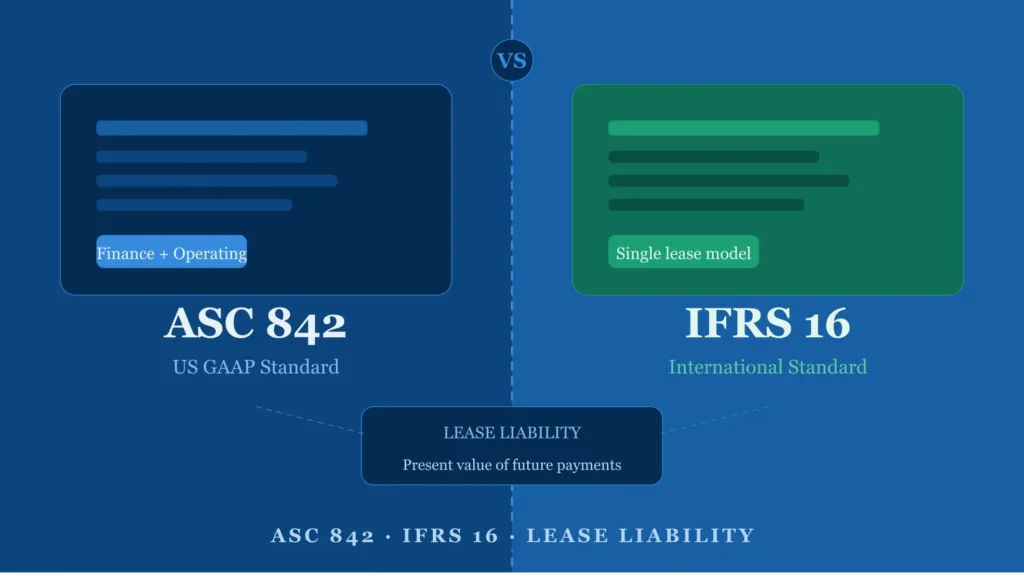
Before IFRS 16, lease accounting was relatively straightforward for many types of leases, often just a monthly expense entry. IFRS 16 introduced the requirement to recognize right of use assets and lease liabilities for most leases, along with ongoing recalculations for modifications, reassessments, and index linked payments.
This added complexity means spreadsheets now need to handle present value calculations, amortization schedules, and disclosure requirements all at once. For teams managing dozens or hundreds of leases, doing this manually becomes a significant operational burden, and the room for error grows with every added lease.
What Automation Actually Solves
Our IFRS 16 calculator is built specifically to handle the requirements of standards like IFRS 16. Instead of manually calculating present values and updating amortization tables, the system does this automatically based on the lease terms entered.
This reduces the chances of calculation errors and frees up time that was previously spent on manual updates. It also creates a centralized system where all lease data lives in one place, rather than being scattered across multiple spreadsheets and departments.
Better Visibility for Leadership
One of the most underrated benefits of automation is the visibility it provides. Instead of leadership waiting for finance to manually compile lease data for a board meeting or forecasting exercise, automated systems can generate reports on demand.
This means questions like “what is our total lease liability” or “how will upcoming renewals affect next year’s cash flow” can be answered quickly, rather than requiring hours of manual data gathering.
Reducing Audit Stress
Auditors want to see accurate calculations, clear documentation, and a reliable audit trail. Automated lease accounting systems typically include built in documentation of assumptions, calculation methods, and any changes made to lease terms over time.
This makes the audit process smoother, since the information auditors need is already organized and accessible, rather than being pieced together from multiple spreadsheet versions and email threads.
Scaling Without Adding Headcount
As businesses grow, whether through new locations, equipment additions, or acquisitions, lease portfolios tend to grow too. Manually managing this growth often means hiring additional staff just to keep up with lease accounting tasks.
Automation allows finance teams to manage a growing number of leases without a proportional increase in manual work, which makes it a more sustainable long term solution as the business scales.
Making the Transition Smoothly
Moving from spreadsheets to automated lease accounting does not have to happen overnight. Many finance teams start by cleaning up their existing lease data, identifying their highest risk or most complex leases, and gradually migrating to a new system while running parallel checks to ensure accuracy during the transition.
Final Thoughts
Spreadsheets served finance teams well for a long time, but the complexity introduced by IFRS 16 and the growth of modern lease portfolios have exposed their limitations. Automating lease accounting is not just about convenience. It is about accuracy, audit readiness, and giving finance teams the time back to focus on higher value work rather than manual data entry.
FAQs
Q 1. Why are finance teams moving away from spreadsheets for lease accounting?
Spreadsheets lack built in error checks, audit trails, and automatic recalculations, which makes them harder to manage accurately as lease portfolios grow and standards like IFRS 16 add complexity.
Q 2. Does automating lease accounting eliminate the need for finance staff?
No, automation reduces manual data entry and calculation work, but finance staff are still needed to review data, oversee compliance, and interpret reports for decision making.
Q 3. How difficult is it to switch from spreadsheets to lease accounting software?
The transition is typically gradual. Most businesses start by organizing existing lease data, prioritizing complex leases, and running the new system alongside spreadsheets temporarily to confirm accuracy before fully switching over.